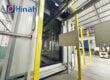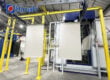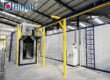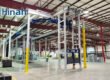
Powder coating line: How to eliminate pretreatment defects?
In any powder coating line, pretreatment is the foundation of quality. No matter how advanced your powder coating booth or powder curing oven is, if the surface preparation is flawed, the final coating will fail—through peeling, blistering, or rust bleed-through. That’s why eliminating pretreatment defects isn’t just a detail; it’s a mission-critical step in achieving a flawless finish.
This article breaks down four essential strategies to help manufacturers identify and eliminate pretreatment-related issues in their powder coating lines—from selecting the right chemicals to investing in proper equipment, implementing strict process control, and training personnel. Let’s dive in and build a coating line that performs from the very first step.
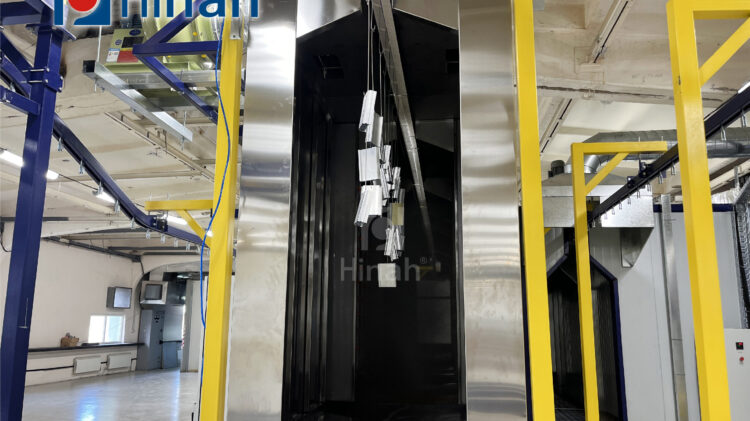
Select the Right Pretreatment Chemicals for Your Powder Coating Line
The choice of pretreatment chemicals is not a one-size-fits-all decision—it must be tailored to the type of workpiece, its surface condition, and the performance requirements of the final coating. In a powder coating line, the pretreatment stage is responsible for cleaning, degreasing, and preparing the metal surface for maximum paint adhesion and corrosion resistance.
For example, heavy steel parts may require strong degreasers and iron phosphate to create a uniform conversion layer, while aluminum surfaces often need specialized deoxidizers or chromate-free solutions to avoid staining and adhesion failure. Using the wrong chemicals can lead to incomplete cleaning, uneven film formation, and early coating defects.
To ensure consistent results across your powder coating line, it’s essential to work with chemical suppliers who understand your product characteristics and can recommend formulations optimized for your production needs. Regular chemical analysis and bath maintenance are also critical to keeping performance stable over time.
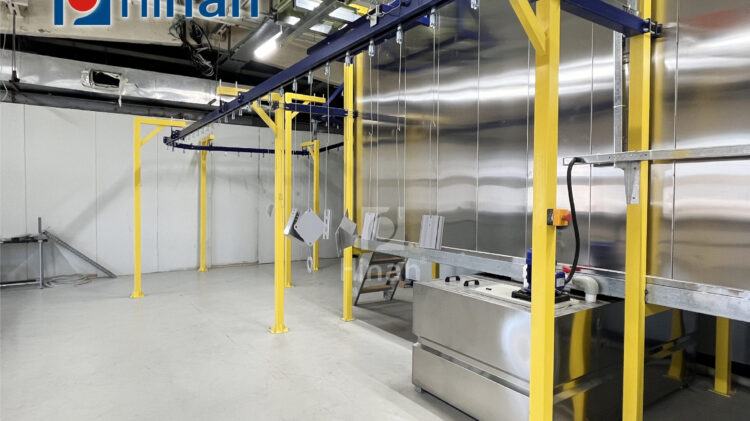
Design a Reliable Pretreatment System within the Powder Coating Line
Even the best chemicals will fail if the pretreatment system itself is poorly designed. In a powder coating line, the equipment used for cleaning, rinsing, and phosphating plays a vital role in ensuring every surface is properly prepared. A flawed system—whether due to uneven spray distribution, insufficient tank capacity, or inadequate temperature control—can introduce defects that no amount of coating can hide.
Choosing between spray and dip-tank pretreatment depends on your product type, size, and throughput needs. Spray systems are efficient for complex geometries and high-volume production, while dip-tank systems offer deeper chemical penetration for heavily contaminated or irregular surfaces. However, both require precise control over flow rates, nozzle placement, temperature, and timing to perform effectively.
A reliable pretreatment system should be custom-engineered as part of the complete powder coating line layout—not as an afterthought. Filtration units, automatic dosing, and pH monitoring should be integrated to maintain consistent chemical balance and reduce maintenance. Investing in smart system design not only prevents common pretreatment defects like flash rust, underfilm corrosion, or poor adhesion—it also reduces downtime and improves overall coating efficiency.
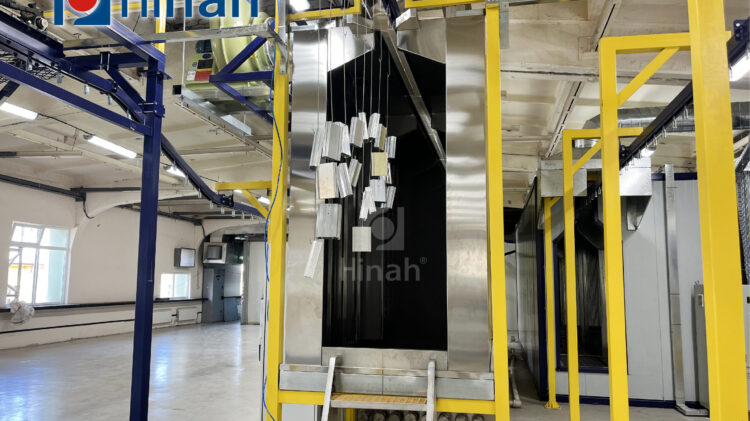
Establish Strict Operating Procedures Across the Powder Coating Line
Consistent quality doesn’t happen by chance—it’s the result of disciplined, standardized procedures. In any powder coating line, strict operating procedures for pretreatment are essential to ensure repeatable results, regardless of shift, operator, or workload. Without clear guidelines, small deviations in chemical concentration, temperature, or processing time can quickly snowball into major defects like poor adhesion, flash rust, or surface contamination.
Your operating procedures should clearly define every step of the pretreatment process: from chemical mixing and bath temperature to line speed, dwell time, and rinse cycles. These documents should not just sit in a manual—they must be actively used, taught, and audited. Incorporating visual controls, checklists, and data logging systems helps operators stay consistent and makes it easier to spot potential issues before they impact product quality.
A powder coating line with rigid process control is not only more efficient—it’s more predictable, more reliable, and ultimately more profitable. Standardization reduces human error, improves troubleshooting, and builds the foundation for long-term success in industrial coating operations.
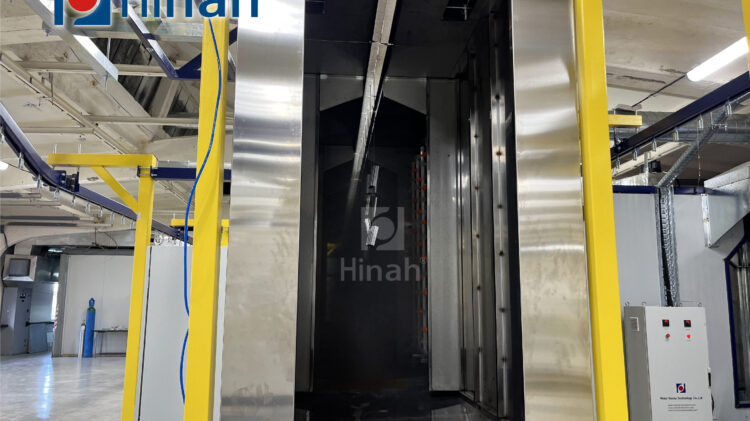
Train Operators and Strengthen Technical Management
Even the most advanced powder coating line will underperform if the people running it lack proper training and oversight. Operators are the first line of defense against pretreatment defects, yet they’re often the weakest link when training is inconsistent or absent. Without a clear understanding of chemical behavior, process timing, or equipment alerts, mistakes happen—and defects follow.
Comprehensive operator training should cover not only the “how” but also the “why”: why bath temperatures matter, why rinse quality affects adhesion, why skipping a pH check can ruin an entire batch. New hires should receive structured onboarding, and experienced staff should be retrained regularly to reinforce best practices and keep up with process changes.
At the same time, strong technical management is crucial. Supervisors and line managers should be equipped to monitor data trends, conduct root cause analysis, and implement corrective actions quickly. In a high-performance powder coating line, technical leadership isn’t optional—it’s a competitive advantage that ensures consistency, reduces waste, and keeps the production line moving.