Can Optimized Powder Coating Line Layout Reduce Oven Heat Loss by 40%?
Can an optimized powder coating line layout really cut oven heat loss by 40%? The short answer is yes. While most focus on burner efficiency or insulation thickness, the physical arrangement of the line often dictates the actual gas bill.
Heat behaves like water; it finds every possible exit. If your layout forces long gaps between stages or creates a “chimney effect” at the oven entrance, you are essentially paying to heat your entire factory floor instead of your parts. By re-engineering the flow to minimize thermal drift and trap hot air where it belongs, a 40% reduction in energy waste becomes a realistic engineering goal, not just a marketing claim. Here is how the physics of your shop floor determines your profit margin.
The “Heat Trap” Secret: Why Your Entry and Exit Points Are Failing
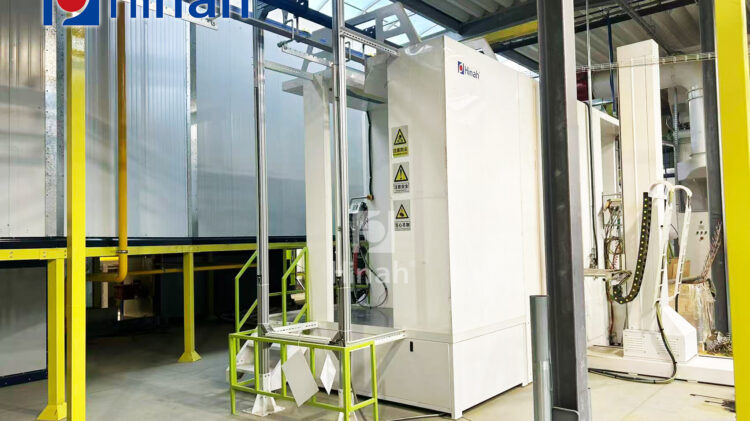
Most heat loss happens at the two biggest holes in your oven: the entry and exit ports. If you align these openings with a straight-line powder coating line layout, you create a wind tunnel. Cold factory air rushes in at the bottom, and expensive hot air escapes through the top. We call this the “Chimney Effect,” and it can drain your energy faster than a faulty burner.
To fix this, you must change how the air moves. One of the most effective methods is the “Camel-Back” design. By elevating the oven section and having the conveyor enter and exit from below, you create a natural heat seal. Since hot air rises, it stays trapped in the elevated “hump” of the oven rather than spilling out into the shop.
Proper orientation also matters. You should never position your oven openings near large exterior loading doors or high-velocity cooling fans. A smart powder coating system design uses the surrounding equipment as a buffer to block drafts. By controlling the airflow around these ports, you keep the temperature stable and stop wasting fuel on air that never touches your parts.
Thermal Proximity Logic: Killing the “Cool-Down” Zone
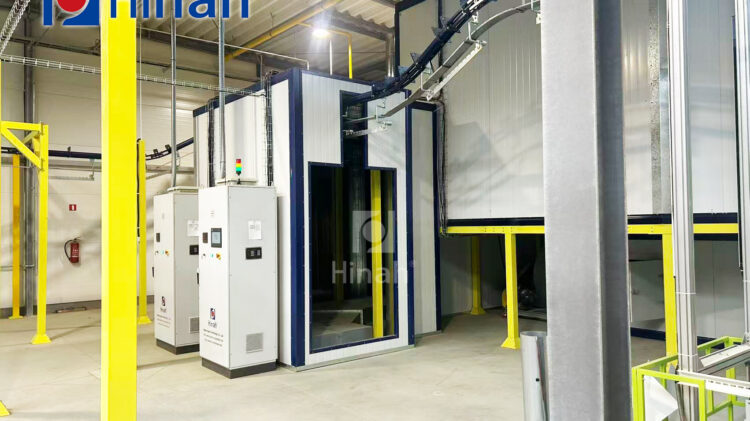
Every meter of conveyor travel between your dry-off oven and the spray booth is a potential profit killer. When parts leave the washing or drying stage, they carry residual heat. If your powder coating line layout features long, winding paths across the factory floor, the metal temperature drops rapidly. This forces your curing oven to work twice as hard just to bring the substrate back up to the target temperature.
We call the space between these stages the “Energy Debt” zone. To minimize this debt, you must tighten the loop. A high-efficiency powder coating plant layout places the dry-off exit as close to the spray booth entrance as safety and humidity standards allow. Keeping the parts warm doesn’t just save gas; it actually improves powder adhesion and flow-out.
Think of your production line as a relay race. You want the “thermal baton” to pass from one stage to the next with zero downtime. By reducing the physical distance and travel time, you ensure that the heat you already paid for stays inside the metal. Shortening these gaps is the simplest way to hit that 40% energy-saving target without buying a single new piece of hardware.
Beyond the Burner: Engineering a Self-Sustaining Heat Zone
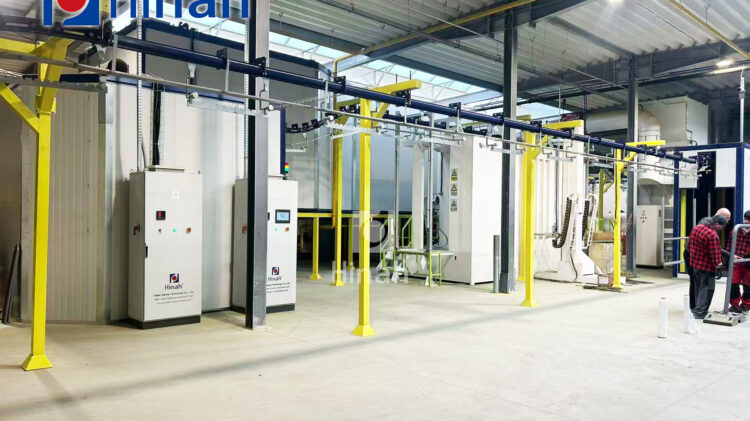
A common mistake in factory planning is treating the oven and the spray booth as two separate islands. In reality, they share the same air. If your powder coating line layout places a high-power exhaust fan right next to the oven entrance, that fan will literally suck the hot air out of your oven. This forces your burners to run constantly to compensate for the loss.
To reach maximum efficiency, you must synchronize your airflow. Smart powder coating system design uses a “Heat Recovery” approach. Instead of venting all the hot exhaust from the curing oven into the atmosphere, you can redirect that filtered, warm air toward the drying stage or use it to create a warm air curtain at the oven’s mouth. This recycles energy that you have already paid for.
Furthermore, pay attention to the booth’s air balance. A well-placed booth acts as a pressure buffer. It prevents cold drafts from hitting the oven ports. When you align your equipment to work with the natural movement of air rather than against it, your shop floor becomes an integrated thermal circuit. This level of coordination is what separates a standard setup from a high-performance, low-energy production line.