Essential Maintenance Tips for Your Powder Coating Booth Lift
Your powder coating booth lift is the silent workhorse of your coating operation – until it fails. Unexpected downtime from a malfunctioning lift doesn’t just disrupt production; it costs thousands per hour in lost throughput and urgent repairs. What if simple, proactive maintenance could slash those risks and extend your equipment’s lifespan by years? This guide delivers essential powder booth lift maintenance tips to keep your system running safely, smoothly, and efficiently. Master these practices, and transform your lift from a liability into a pillar of reliability.
I. Why the Powder Coating Booth Lift Maintenance Matters
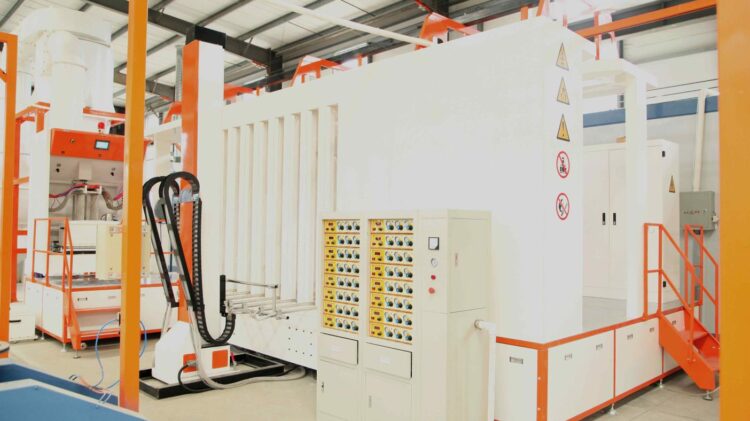
Your powder coating booth lift isn’t just another piece of equipment—it’s the beating heart of your production flow. When operating smoothly, it effortlessly moves parts through the coating process, maximizing throughput and consistency. But when neglected, a single lift failure can cripple your entire operation, triggering costly domino effects: production halts, missed deadlines, rushed repairs, and compromised finish quality.
Reactive maintenance (“fix it when it breaks”) is a dangerous gamble. Dust accumulation in brake assemblies, misaligned gears, or frayed cables won’t announce their failure—they strike without warning. Proactive maintenance, however, transforms your lift from a liability into a pillar of reliability:
- Safety Assurance
Prevents catastrophic failures (e.g., brake slippage, cable snaps) protecting operators and products.
- Cost Control
Slashes emergency repair bills + extends asset lifespan by 30-50%.
- Operational Excellence
Ensures consistent cycle times, reduces rework, and safeguards your coating quality.
Treating your powder booth lift as a “set-and-forget” asset risks more than money—it risks your reputation. In the sections ahead, you’ll discover actionable, technician-approved maintenance strategies to keep this critical system running with military precision. Because in powder coating, uptime isn’t optional—it’s everything.
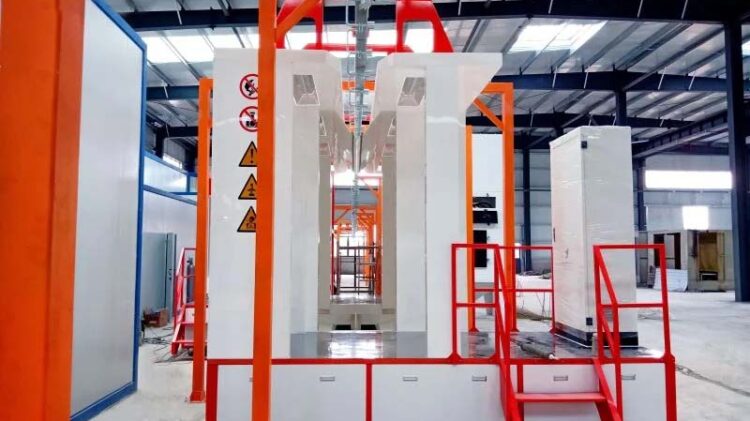
II. Powder Coating Booth Lift Routine Mechanical Inspection & Adjustment
2.1 Listen & Feel: Detect Early Warning Signs
Begin daily checks by running the lift unloaded at start-of-shift, actively listening for abnormal vibrations or grinding/screeching noises that signal bearing, gear, or alignment issues; if sounds persist after cleaning friction surfaces with mineral spirits, immediately shut down to inspect drive chains and bushings before catastrophic failure occurs.
2.2 Brake System: Your Critical Safety Net
Perform weekly brake calibration by verifying clearance between pads and wheels (ideal: 0.5–1.0 mm) using a feeler gauge, adjusting via caliper screws if out of tolerance, while rigorously cleaning friction surfaces with mineral spirits – never oil-based cleaners – to eliminate grease/dust that reduces braking force by 40%; validate performance by stopping a rated load at 1m height, where >5 cm drift demands pad replacement.
2.3 Joint & Fastener Integrity: Eliminate Play
Conduct monthly torque checks on motor mounts, gearbox couplings, and structural weld points using a calibrated wrench, re-torquing to OEM specifications to prevent operational instability, with a pro tip to mark bolts with paint pens for visual loosening detection.
III. Powder Coating Booth Lift Electrical Maintenance
3.1 Cable and Wiring Integrity
Conduct weekly visual inspections of all power and control cables for fraying, kinking, or insulation damage, immediately replacing compromised sections and securing loose bundles with UV-resistant cable ties to prevent arc faults; pay special attention to flex points near pulleys or joints where stress concentrates, as undressed cable failures trigger 38% of unplanned downtime incidents in powder coating systems.
3.2 Motor Overheating Protocols
Halt operations instantly if motors exceed 60°C surface temperature (measured via infrared thermometer), investigating root causes like phase imbalance (>5% variance), blocked ventilation fins, or bearing seizures before restarting; supplement quarterly bearing re-greasing using high-temperature lithium-complex grease (NLGI #2) – overfilling beyond 30% cavity volume causes grease churning and accelerated failure.
3.3 Electrical Cabinet Hygiene
Clean control panels, VFDs, and contactors bi-weekly using compressed air (<30 PSI) and static-safe brushes, removing powder accumulation that induces short circuits; always de-energize systems first and seal conduit entries with silicone grommets post-cleaning – a mere 0.3mm dust layer on relay contacts increases resistance by 400%, inviting thermal runaway.
IV. Precision Lubrication & Critical Component Management
Execute lubrication strictly per OEM intervals using manufacturer-specified oils/greases: apply ISO VG 220 synthetic gear oil to reducers quarterly (check levels via sight glass), pack external gears monthly with EP-2 lithium-complex grease (NLGI #2) until seals bulge slightly (≤30% cavity volume), and synchronize rotating mechanisms by verifying parallel alignment of reducer-gear axes with laser tools – maintaining ≥70% gear contact surface and 0.1–0.3mm meshing clearance to prevent pitting failures; neglect accelerates wear 5x, risking $12k+ gearbox replacements.
Inspect load-bearing wire ropes weekly for broken strands (discard if ≥6 breaks in one rope lay or ≥3 adjacent breaks), kinks, or diameter reduction >7%, replacing immediately with OEM-certified cables; simultaneously audit rotating mechanisms for ≥70% tooth contact using Prussian blue paste, while confirming bolt torque on lift columns (±5% of 90 Nm spec) – deviations exceeding 2mm/m in frame squareness induce uneven stress, precipitating catastrophic drops.
Conclusion
Your powder coating booth lift is far more than moving parts – it’s the pulse of your productivity. Ignoring its maintenance risks more than $5,000/hour downtime; it endangers operator safety and product quality. Yet as this guide proves, proactive care is strikingly simple: daily noise checks, weekly brake calibrations, and precision lubrication prevent 90% of catastrophic failures. By embedding these protocols, you transform reactive firefighting into predictable operations.