
Troubleshooting Color Inconsistency in Your Powder Coating Production Line
Few things are more frustrating for a finisher than opening the oven door and discovering that the colors don’t match. What should have been a flawless, uniform coating instead shows subtle shade differences—enough to ruin the appearance and demand a costly rework. Color inconsistency in a powder coating production line isn’t just a visual issue; it’s a signal that something deeper in the process has gone wrong.
Whether it’s an unstable gun voltage, uneven oven temperature, or a small mistake in powder handling, even the slightest imbalance can change how a finish looks and performs. Understanding where these variations come from is the first step toward restoring consistent results expected.
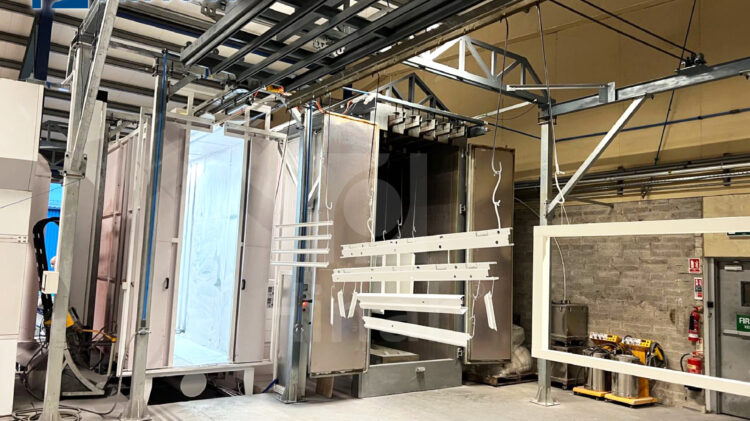
Equipment Factors Affecting Color Uniformity in Powder Coating Production Line
The foundation of a consistent finish always begins with the equipment. When something within the powder coating production line is slightly off—an unstable spray pattern, a clogged nozzle, or a weak electrostatic charge—the result is often uneven coverage and unwanted color variation.
One of the most common culprits is inconsistent voltage in the spray gun. Since powder coating relies on electrostatic attraction, even small voltage fluctuations can change how much powder adheres to the surface. Areas that receive less charge collect less powder, creating a thinner coat that cures into a lighter shade.
Another frequent issue lies within the powder feed and recovery system. When reclaimed powder is mixed with fresh material without proper screening or blending, differences in particle size and charge retention can cause visible shade shifts. Over time, this inconsistency becomes more noticeable, especially when coating large or connected components.
Finally, conveyor speed should never be overlooked. A line that runs too fast may not allow enough dwell time for powder deposition, while a slower-moving line can cause uneven buildup. Both scenarios disrupt coating thickness uniformity, which directly affects how the cured color appears under light.
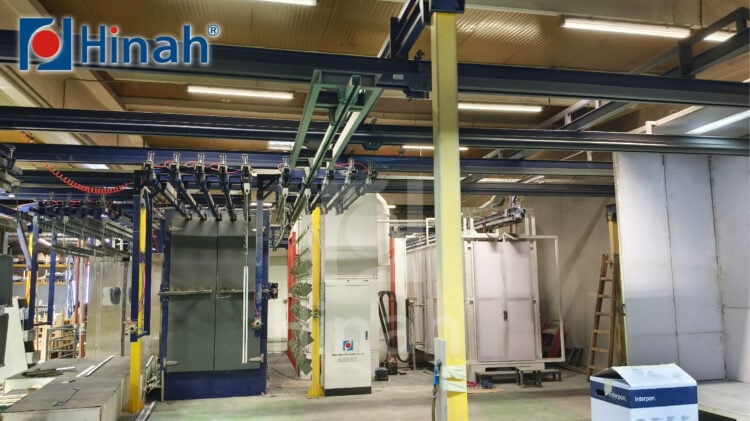
Process and Environmental Conditions in Powder Coating Production Line
Even with well-calibrated equipment, the surrounding process and environment play a decisive role in color consistency. A powder coating production line is a delicate system—one small change in temperature, humidity, or air movement can alter how the coating forms and cures.
The curing oven is often the first place to look. Uneven temperature zones or a malfunctioning sensor can cause some parts of a component to overbake while others remain undercured. The result? A finish that looks uneven in tone or gloss. Maintaining accurate temperature control and ensuring balanced airflow throughout the oven are essential to achieving a uniform appearance.
Environmental factors such as humidity and dust are equally influential. When humidity levels rise, the electrostatic charge weakens, making powder particles harder to attract and retain on the surface. Likewise, airborne dust can interfere with adhesion, leaving small imperfections that scatter light differently and alter the perceived color.
Surface preparation also determines how consistently the powder adheres. If oil, rust, or residue remains on the part, certain sections may reject powder during spraying. After curing, these spots often appear lighter or duller than the rest. Establishing a strict pre-treatment process—washing, drying, and checking cleanliness—helps prevent such irregularities before they ever reach the booth.
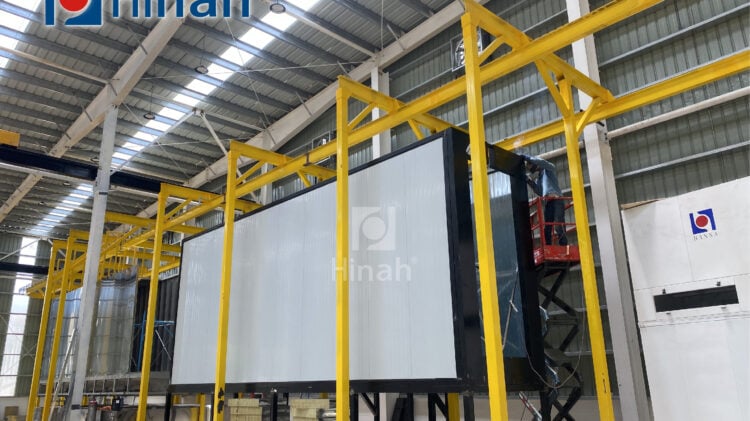
Operational Practices to Maintain Color Consistency in Powder Coating Production Line
Even the most advanced powder coating production line cannot deliver perfect color results without consistent human operation. Small differences in how operators adjust gun settings, move parts through the booth, or interpret color standards can easily create visible shade variations. The key lies in discipline and repetition—training every operator to follow the same parameters, recording settings for each product type, and enforcing a strict standard operating procedure. Regularly calibrating equipment, monitoring booth conditions, and documenting process data help ensure that experience doesn’t vary from one shift to another. When every team member treats consistency as part of the process, not a coincidence, the entire line becomes capable of producing reliable, repeatable color results.