
Why Powder Does Not Stick in Your Powder Coating Line
Powder not sticking is one of those problems that looks simple—until it stops your powder coating line.
The powder coating gun is working. The powder looks fine. The line is running.Yet the coating refuses to build up on the workpiece, leaving thin coverage, uneven film thickness, or bare areas that fail inspection.
What makes this issue frustrating is that it rarely has a single cause. In most powder coating lines, poor powder attraction is the result of several small issues stacking together—low electrostatic voltage, weak grounding, excessive booth airflow, poorly designed fixtures, or an incorrect gun-to-part distance. On their own, each factor may seem minor. Combined, they can completely undermine coating performance.
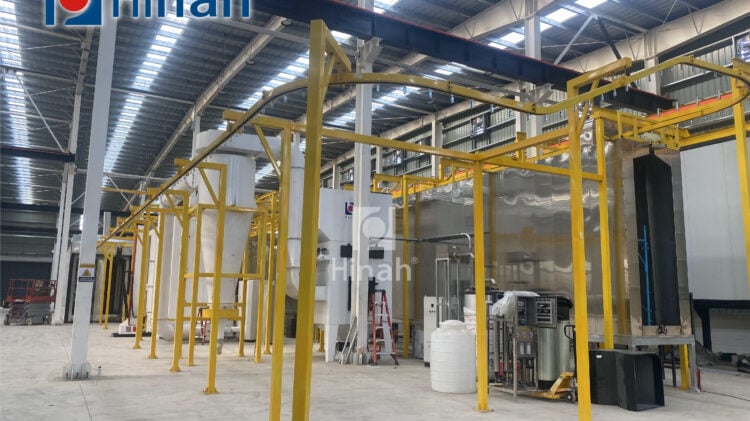
Causes of Poor Powder Adhesion in a Powder Coating Line
1.1 Electrostatic Spray Gun Issues: No Voltage or Low Voltage
The electrostatic spray gun relies on a high-voltage charge to attract the powder to the workpiece. If there is no voltage or the voltage is too low, the powder will not adhere properly to the part. Instead, the powder may scatter or fail to form a uniform coating, as the attraction is not strong enough to pull the particles toward the surface.
1.2 Poor Workpiece Contact or Thick Insulating Coating on Fixtures
Proper grounding of the workpiece is essential for effective powder coating. If the workpiece is poorly grounded or if the fixture has a thick insulating layer, the electrostatic charge will not properly transfer to the part. This results in weak or uneven powder adhesion. Even a small insulating layer on the fixture can drastically affect the coating process, especially for parts with irregular shapes or large surface areas.
1.3 Excessive Airflow in the Powder Coating Booth
Airflow in the powder coating booth is necessary to control overspray, but excessive airflow can interfere with the adhesion process. If the exhaust system is too powerful, it can suck up the powder before it has a chance to settle on the workpiece. This can lead to a reduction in adhesion quality, leaving parts with thin or inconsistent coatings.
1.4 Improper Fixture Design: Shielding Effect
The design of the fixture plays a crucial role in powder adhesion. If the fixture causes a shielding effect, areas of the workpiece will be blocked from the electrostatic field, preventing powder from reaching those spots. This can result in incomplete or uneven coating coverage. Improper fixture design may also lead to poor powder attraction due to incorrect part positioning or excessive density of parts on a single fixture.
1.5 Incorrect Distance Between Spray Gun and Workpiece
The distance between the spray gun and the workpiece is a key factor in determining how well the powder adheres to the surface. If the spray gun is too far from the workpiece, the electrostatic charge dissipates before the powder can reach the part, reducing adhesion. On the other hand, if the spray gun is too close, it can cause overspray, leading to a thicker and uneven coating.
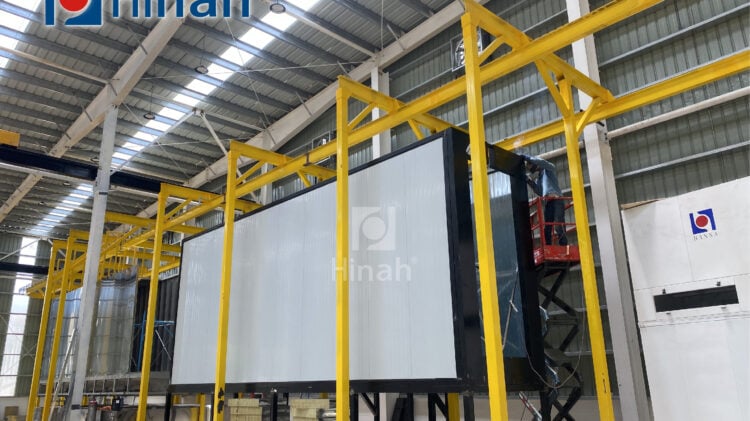
Solutions to Improve Powder Adhesion in Your Powder Coating Line
2.1 Ensure Proper Voltage on Electrostatic Spray Gun
To achieve optimal powder adhesion, it is crucial to ensure that the electrostatic spray gun is operating at the correct voltage. Low or absent voltage can cause the powder to lack the necessary charge to cling to the workpiece. Therefore, adjusting the voltage to the recommended range is key to restoring proper adhesion.
If the voltage is too low, increasing it within the manufacturer’s specified range can help improve the attraction. However, it’s important to maintain balance, as too high a voltage can cause the powder to overshoot the workpiece, leading to poor coating efficiency.
2.2 Improve Workpiece Grounding and Fixture Contact
Workpiece grounding plays a vital role in ensuring that the electrostatic charge is effectively transferred. If the workpiece does not have proper grounding, the powder may not adhere uniformly. Improving the contact between the fixture and the workpiece, as well as ensuring that the fixture itself is free from insulation, will enhance the adhesion process.
Removing any thick insulating layers from the fixture can significantly improve the electrostatic attraction. Ensuring that the fixture maintains solid electrical contact with the workpiece will lead to better coating consistency.
2.3 Adjust Airflow in the Powder Coating Booth
Maintaining optimal airflow in the powder coating booth is crucial for ensuring proper powder distribution. If the airflow is too strong, it can blow away the powder before it has a chance to settle on the workpiece, leading to poor adhesion.
Reducing the exhaust fan speed or adjusting the booth’s ventilation system can help minimize powder loss and ensure more even coverage. Balancing airflow ensures that the powder reaches the workpiece without being disturbed, leading to a more consistent and uniform coating.
2.4 Redesign Fixtures to Eliminate Shielding Effects
To achieve uniform powder coverage, fixture design must allow powder to reach every part of the workpiece. If fixtures create shielding effects, certain areas may be blocked from the electrostatic field, causing uneven coating.
Adjusting the design of the fixture to reduce these shielded areas will ensure that the powder can uniformly reach the entire surface of the part. Repositioning parts on the fixture or using a better fixture design that doesn’t obstruct the spray path will also help improve adhesion.
2.5 Maintain the Correct Distance Between Spray Gun and Workpiece
The distance between the spray gun and the workpiece is a critical factor in ensuring powder adhesion. If the gun is too far away, the electrostatic field weakens, and the powder may fail to adhere. If it’s too close, it can lead to overspray and an uneven coating.
Adjusting the distance between the gun and the workpiece to the manufacturer’s recommended specifications—usually between 6 to 12 inches—will help to achieve an even and consistent coating. Additionally, keeping the gun at the correct distance allows for the optimal dispersion of powder particles, improving the overall coating quality.